


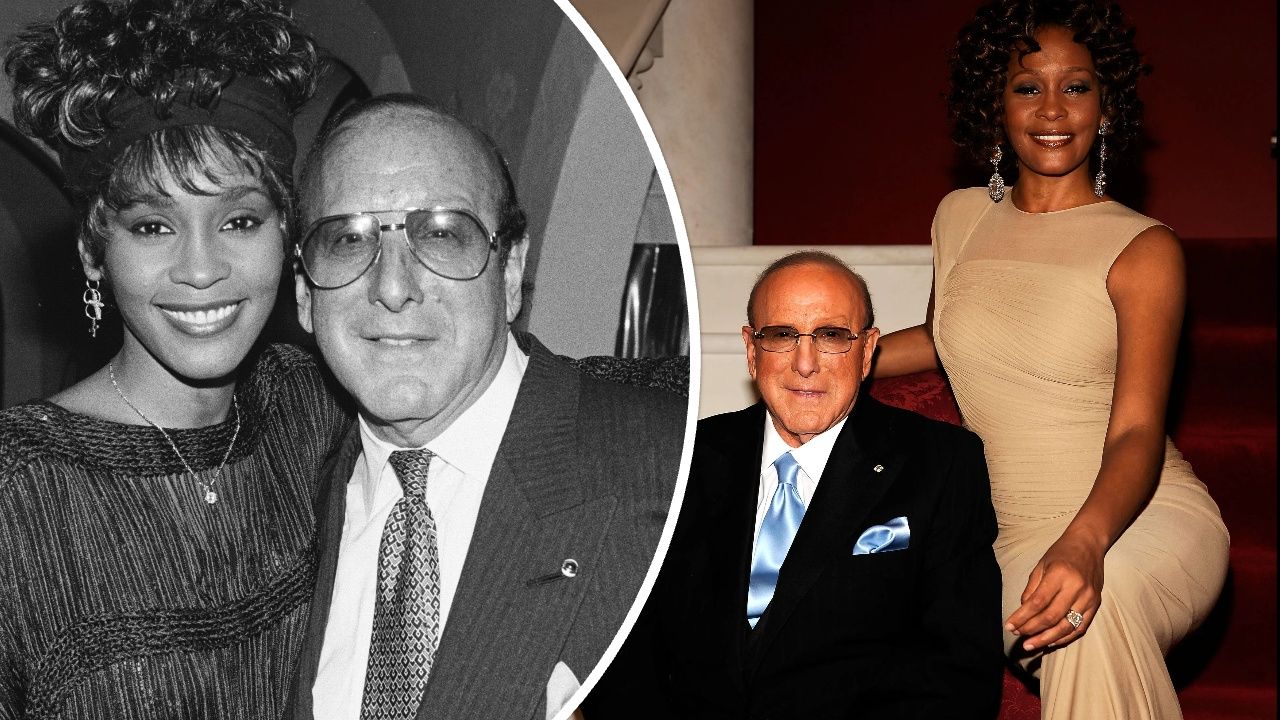
The relationship between Clive Davis and Whitney Houston remains one of the most significant and scrutinized partnerships in music history. When the legendary producer passed away at 94 in June 2026, it prompted a global reassessment of his monumental career and, inevitably, his complex, often debated role in the life and tragic death of the woman he called a “vocal genius”. For over three decades, Davis was more than a record executive to Houston; he was her discoverer, her mentor, her champion, and, in the eyes of many, the architect of her stratospheric fame. Yet, his name is also forever linked to the controversies that shadowed her final years and the deeply unsettling circumstances of her death in 2012.
To understand the full scope of what Clive Davis did for—and perhaps to—Whitney Houston, one must look beyond the headline-grabbing success. He didn’t just sign her; he meticulously crafted her into a global phenomenon. After discovering her in 1983 at a New York nightclub, Davis took an unprecedented two years to produce her self-titled debut album, a testament to his painstaking attention to detail.
He even offered her a unique “key man” clause, allowing her to leave the label if he did—a deal he never gave another artist, which he cited as proof of his “intensity of commitment”. This wasn’t just business; it was a deep, personal investment that would yield 11 Billboard No. 1 hits and over 50 million records sold in the U.S. alone.
You Might Like: Inside Anne Hathaway’s Family: Husband Adam Shulman, Their Two Sons, and a Third on the Way
The Architect of Fame and the Cost of Crossover
Clive Davis’s strategy for Houston was deliberate and, by all commercial metrics, brilliant. He carefully curated her image for maximum crossover appeal, aiming to make her a star for all audiences. However, this very strategy has been a source of posthumous criticism. A contrasting documentary about Houston, Whitney: Can I Be Me, cast her as a victim of an industry’s baser instincts, with a former Arista employee recounting how material deemed “too black sounding was sent back”.
This pursuit of a mainstream, “safe” image came at a psychological cost. Houston was devastated to learn that some in the Black community called her “White-ney” and a “sellout”. While Davis rejected the “Svengali” label as “slithery”, his role as the primary shaper of her public persona raises uncomfortable questions about whether the immense pressure to maintain that carefully constructed image contributed to her personal struggles.
Clive Davis, the music executive who founded Arista Records and J Records and helped shape the careers of Whitney Houston, Bruce Springsteen, Aretha Franklin, Carlos Santana, Janis Joplin, Alicia Keys, Carrie Underwood and many others, has died at age 94. https://t.co/JFYUfIi0gE pic.twitter.com/vMprbJ9rcz
— Rolling Stone (@RollingStone) June 22, 2026
This tension between professional guardianship and personal turmoil became most starkly visible on the day of Houston’s death. On February 11, 2012, Houston was found dead in her bathtub at the Beverly Hilton Hotel, just hours before she was scheduled to appear at Davis’s annual pre-Grammy gala. The decision Davis made in the aftermath remains the most controversial act of his career: he chose to let the party go on.
The Party, The Blame, and The Final Verdict
Initially, it appeared Clive Davis would cancel the event. Instead, he proceeded, transforming it into a partial tribute where he led a moment of silence and stated, “Simply put, Whitney would have wanted the music to go on”. This rationalization was met with widespread disgust. Fellow singer Chaka Khan famously called the decision “complete insanity” on CNN, pointing out the grotesque irony of guests partying downstairs while Houston’s body was still being attended to in a room upstairs. To many, it was a symbol of the music industry’s callousness, prioritizing the show over the humanity of its fallen star.
The question of blame, however, is more complex. Davis himself has been adamant that the responsibility for her decline did not lie with her ex-husband Bobby Brown. In his memoir, he wrote about her denial regarding her addiction, acknowledging the painful reality that “if an addict does not want to get help, there ultimately is very little that anyone else can do”. While some have pointed fingers at Davis for continuing to have her perform even as her voice deteriorated and her struggles became public, his public stance has been one of a deeply saddened mentor who felt powerless in the face of addiction.
Also See: Shohei Ohtani’s Rare Glimpse into Life with Two Children
The coroner’s report ruled her death an accidental drowning, with heart disease and cocaine use as contributing factors. In the end, the narrative that Clive Davis was directly responsible for Whitney Houston’s death is not supported by evidence. Rather, he was a pivotal figure in a tragic story—a man who helped build her empire but who, like so many others around her, was ultimately unable to save her from herself. His legacy with Houston is a poignant and unresolved duet of monumental success and profound loss.