


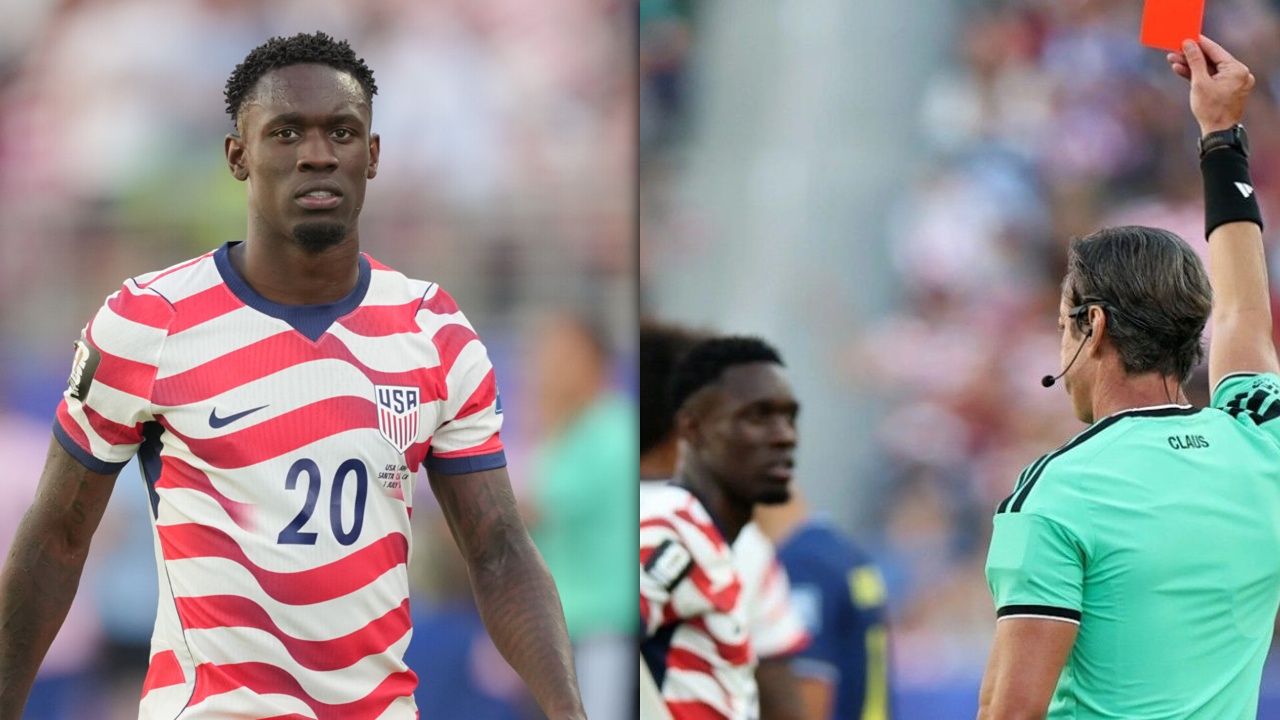
In a stunning and highly controversial twist at the 2026 FIFA World Cup, the United States Men’s National Team received a major boost just hours before their crucial Round of 16 clash against Belgium. Their star striker and leading goalscorer, Folarin Balogun, was unexpectedly cleared to play after FIFA’s Disciplinary Committee decided to suspend the automatic one-match ban he had received following a red card in the previous round. The decision, which sent shockwaves through the footballing world, was met with elation in the US camp and outrage from Belgium and other competing nations, raising serious questions about the consistency and integrity of FIFA’s disciplinary process.
The saga began during the USMNT’s Round of 32 victory over Bosnia and Herzegovina on July 1, 2026. In the 64th minute, Balogun was shown a straight red card after a Video Assistant Referee (VAR) review. The incident involved a challenge where Balogun’s cleats made contact with the right ankle of Bosnian defender Tarik Muharemovic. Under Article 10.5 of FIFA’s tournament regulations, a direct red card for “serious foul play” automatically triggers a one-match suspension.
Given that teams cannot appeal red cards or the subsequent suspensions, it seemed certain that Balogun would miss the knockout match against Belgium. However, in an unprecedented move, FIFA utilized a different clause in its rulebook to overturn the suspension.
You Might Like: Who Is David Muir’s Wife? The Simple Answer May Surprise You
The FIFA Ruling and the Trump Intervention
The official reason for Balogun’s availability is rooted in Article 27 of the FIFA Disciplinary Code. This article grants FIFA’s judicial bodies the authority to “fully or partially suspend the implementation of a disciplinary measure”.
Following a review, FIFA’s Disciplinary Committee imposed a one-match suspension on Balogun for breaching articles 14 and 66 of the disciplinary code but, critically, decided to suspend the implementation of that ban for a probationary period of one year. This means that while the red card and the ban still technically stand, Balogun is free to play in the immediate future. However, if he commits a similar infringement during the next 12 months, the original one-match suspension will be enforced.
🚨 Exclusive: The White House made a direct call to FIFA to ask Gianni Infantino to review Folarin Balogun’s red card.
FIFA approached for comment and referred to the findings of its independent committee.
FIFA sources insist White House influence could not affect the decision… pic.twitter.com/Rl97b1wm4X
— Ben Jacobs (@JacobsBen) July 5, 2026
Behind the scenes, the decision was heavily influenced by political intervention. Multiple reports, including from The New York Times and CBS News, confirmed that US President Donald Trump personally called FIFA President Gianni Infantino on the Thursday following the match to request a review of Balogun’s suspension. This high-level intervention, coupled with lobbying from the White House’s World Cup task force, appeared to be the driving force behind FIFA’s sudden change of heart. President Trump later celebrated the decision on social media, thanking FIFA for “reversing a great injustice!”
A Firestorm of Controversy
The decision was immediately met with a firestorm of criticism from across the football world, with many accusing FIFA of bending its own rules under political pressure. The Royal Belgian Football Association (RBFA) expressed its “astonishment,” stating that the move was in “direct contradiction” with the competition’s regulations and announced it was exploring “all potential options” to challenge the ruling. Belgium’s coach even derided the decision as an “April Fools’ joke”.
Also See: Is Joey Chestnut Married in 2026? His Relationship Status and Dating History
The controversy also drew sharp criticism from other coaches, most notably England manager Thomas Tuchel. With his own player, Jarell Quansah, serving a suspension for a red card, Tuchel questioned the integrity of the process, asking, “Where does this start and where does this end now?” He pointed out the dangerous precedent this sets, highlighting the uncertainty it creates for the rules of the tournament.
The core argument from critics is that while Balogun’s challenge may have appeared accidental, the rules are clear and are meant to be applied consistently to all teams. By bypassing the standard procedure, FIFA has opened itself up to accusations of favoritism, undermining the fundamental principle of fair play that is supposed to be the bedrock of the sport.