

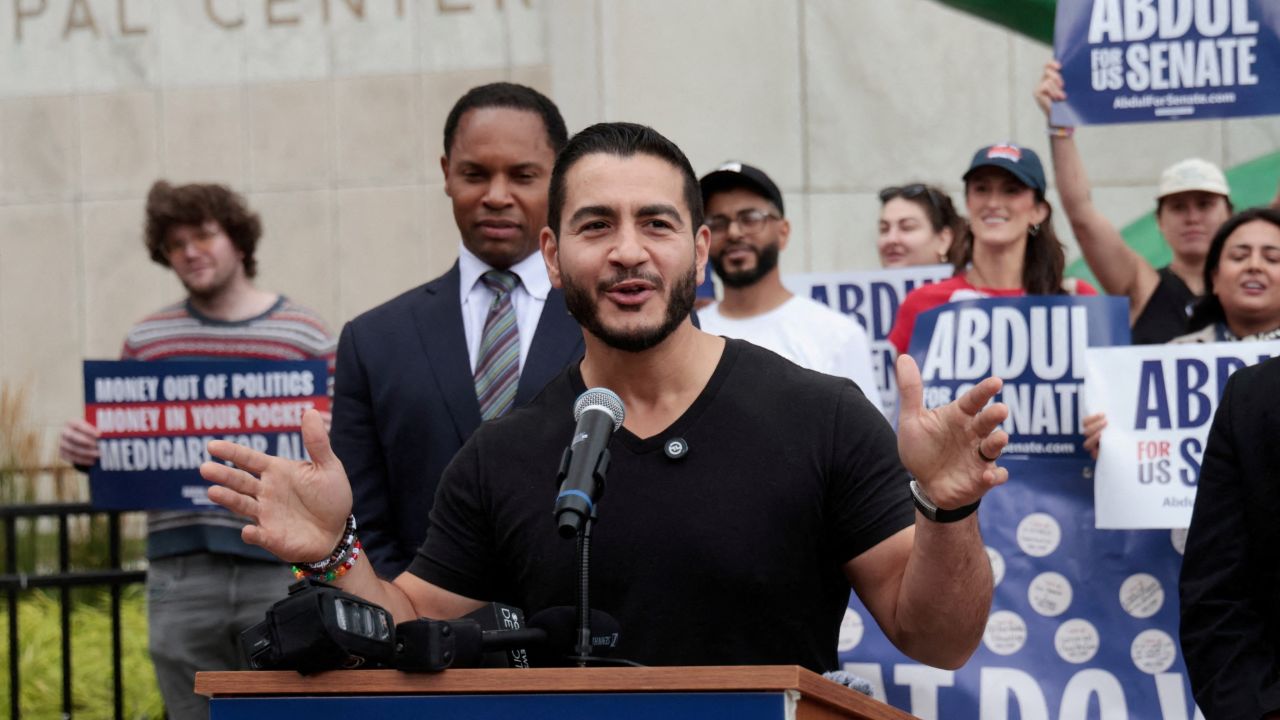
Abdul El-Sayed criticizes AIPAC money flooding elections while holding a hardline Israel stance that rejects unconditional U.S. military aid and demands equal rights for Palestinians.
Abdul El-Sayed, the progressive Democrat who recently secured the party’s nomination for U.S. Senate in Michigan, has made his sharp criticism of the American Israel Public Affairs Committee and Israeli policy a defining feature of his political identity. A physician, former public health official, and son of Egyptian immigrants, El-Sayed frames his positions around principles of international law, equal rights, and redirecting American resources to domestic needs rather than foreign military support. His views have drawn strong backing from progressive and pro-Palestinian groups while sparking intense opposition from pro-Israel organizations and establishment Democrats.
In the 2026 Democratic primary, El-Sayed defeated Rep. Haley Stevens, who received tens of millions in support from AIPAC-affiliated groups. He has repeatedly described that spending as legalized bribery and argued that AIPAC exerts undue influence over both parties, prioritizing a foreign government’s interests over American ones. His victory, achieved despite a significant financial disadvantage, marked a notable moment for critics of U.S. policy toward Israel within the Democratic Party.
You Might Like: Perez Hilton Net Worth 2026
Opposition to AIPAC’s Influence
Abdul El-Sayed has positioned AIPAC as a central obstacle to progressive priorities. He has accused the lobby of flooding races with money to punish candidates who question unconditional U.S. support for Israel, citing its heavy spending against him and previous efforts against other lawmakers. In his view, this dynamic forces politicians to serve “two masters” and distorts foreign policy debates. He has refused AIPAC’s support and does not accept contributions from corporate or foreign-interest PACs, arguing that such funding undermines democratic accountability.
Abdul El-Sayed has won the Democratic primary in Michigan’s U.S. Senate race, defeating Haley Stevens. pic.twitter.com/JLupDcrQdd
— Pop Base (@PopBase) August 5, 2026
After his primary win, he continued to highlight the group’s role while calling for party unity, emphasizing that opposition to AIPAC does not equate to hostility toward Jewish Americans or Judaism itself. He has stressed a clear distinction: AIPAC and the Israeli government are not the same as the Jewish people.
Views on Israel, Aid, and Self-Determination
On Israel, Abdul El-Sayed has been uncompromising. He has described the Israeli government’s actions in Gaza as genocide and characterized the broader system as apartheid, stating that the United States has been “aiding and abetting” these practices through military assistance. He opposes all unconditional foreign military aid to Israel—both offensive and defensive weapons—and extends the same standard to other recipients such as Egypt, Saudi Arabia, and Pakistan. His guiding principle is international law, including the Leahy laws that restrict arms transfers to human rights violators. He has called for treating Israel as a “rogue nation” that violates these norms, ending diplomatic cover at international bodies, and reallocating those funds to American schools, healthcare, and infrastructure.
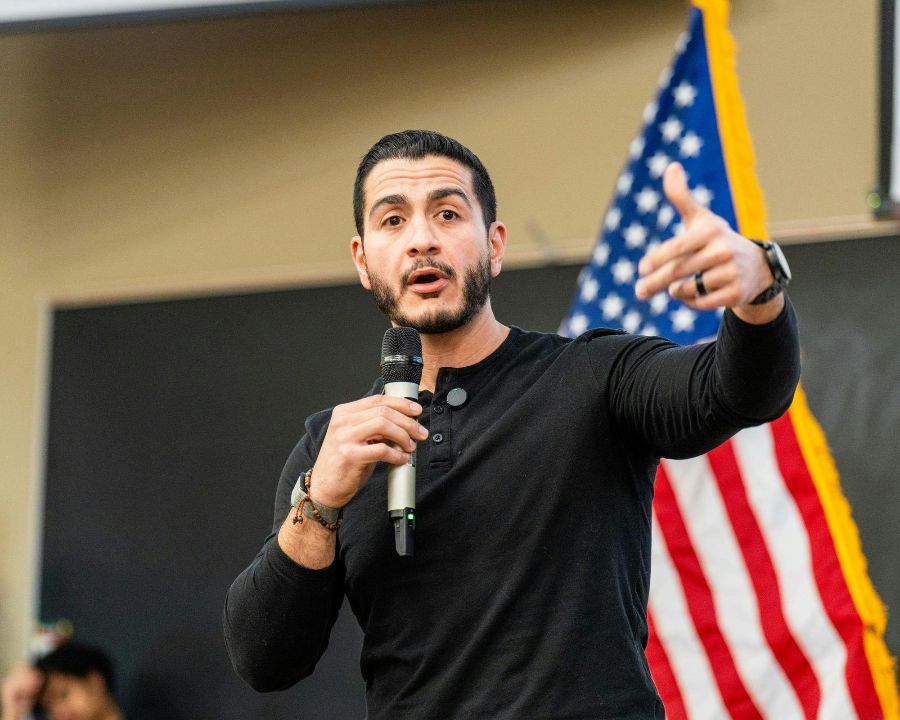
El-Sayed has consistently declined to affirm Israel’s right to exist specifically as a Jewish state, arguing that the question itself is a distraction. He maintains that Israel already exists and that the more relevant issue is whether it has a claim on American tax dollars while, in his assessment, denying equal rights to Palestinians. He supports self-determination and equal rights to peace and dignity for both Jewish Israelis and Palestinians, saying the ultimate political arrangement—whether two states, one state, or another model—should be decided by those peoples themselves.
He has rejected the idea that one can be both a progressive committed to human rights and a Zionist in the conventional sense, describing every definition of a Jewish state as containing “illiberal values.” At the same time, he has repeatedly affirmed a commitment to Jewish safety equal to that of his own family and has condemned antisemitism alongside Islamophobia.
Also See: Tarik Skubal’s Secret Weapon
Abdul El-Sayed’s positions have earned him the first-ever U.S. Senate endorsement from Jewish Voice for Peace Action and support from figures such as Sen. Bernie Sanders and Rep. Rashida Tlaib. Critics, including AIPAC and some Jewish organizations, view his rhetoric as extreme and his reluctance to affirm Israel’s character as a Jewish state as concerning. As the Democratic nominee heading into the general election, El-Sayed continues to insist that his stance rests on consistency: apply the same rules of international law and fiscal responsibility to every country, prioritize American communities, and refuse to let powerful lobbies dictate the terms of debate.