


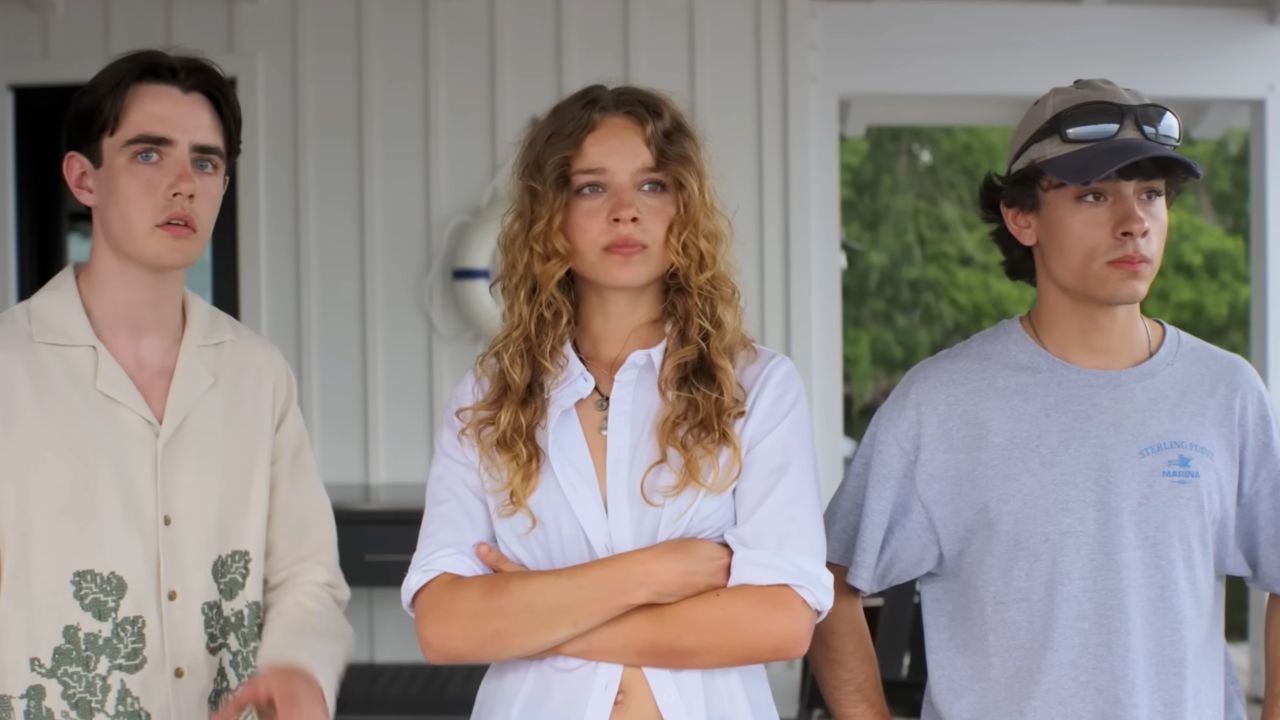
Amazon Prime Video’s Sterling Point has quickly become a standout in the young adult genre, not just for its compelling mystery but for its refreshingly authentic portrayal of queer life. The series follows Annie Jacobson (Ella Rubin), an adopted teenager who travels to a mysterious Canadian island she inherited, only to discover a secret sister and a web of family secrets. While the central mystery drives the plot, the show’s heart beats strongly through its diverse and complex LGBTQ+ characters, making it a hit with sapphic audiences and critics alike.
The question of whether Sterling Point is “gay” is answered emphatically from the very first episode. It’s not just a show with a token gay character; queerness is woven into the very fabric of its narrative. Creator Megan Park, drawing from her own experiences in early 2000s television, deliberately built a world where queer representation is not an added marketing point but an authentic and integral part of the story. As Park herself stated, “It just feels like queer representation just makes sense.” The show presents a sprawling, queer “chosen family” where characters are defined by their hopes, grief, and complexities, with their sexuality being a natural part of who they are.
A Tapestry of Queer Characters
The show boasts a rich list of LGBTQ+ characters, with Ramona (Amélie Hoeferle) at the center. She is a gay teenager who is left feeling completely lost after the death of her only family member, her grandfather. She is described as free-spirited, jaded, and walled off, and she openly identifies as gay, offering a raw and unflinching portrayal of a young woman in crisis.
Ramona’s love interest is Oona (Bo Bragason), her long-time best friend. Both characters are introduced as queer individuals who are open about their sexualities, with their slow-burn romance forming a central and beloved storyline. The series doesn’t shy away from the messiness of young love, as Oona struggles with attachment issues stemming from a complicated relationship with her estranged mother.
The official trailer for Megan Park’s upcoming series ‘STERLING POINT’ has been released.
Streaming on Prime Video from August 5. https://t.co/r5IleLOQvj
— HiddenGemCinema (@HiddenGemCinema) July 10, 2026
Beyond this central romance, the show features other notable queer characters. Sully (Nikko Angelo Hinayo) is a gender non-conforming character, adding another layer to the show’s diverse representation. The series also includes Stacey (Ksenia Daniela Kharlamova) as a queer character, and interestingly, Annie’s boyfriend is described as gay, a fact that is known to everyone but him. This wide array of characters ensures that the show’s portrayal of the LGBTQ+ community is multifaceted and nuanced.
The Cast Behind the Authenticity
The authenticity of Sterling Point is largely due to its talented cast, who bring these complex characters to life with palpable emotion. Amélie Hoeferle, who plays Ramona, was drawn to the role precisely because of its “complex sadness.” The 24-year-old actress, known for The Hunger Games: The Ballad of Songbirds & Snakes, has spoken about how the character’s devastating transitional period was an interesting and compelling starting point for her. Her portrayal has resonated deeply with fans, who have praised the character’s authenticity.
Also See: Ben Jones Dead at 84
Bo Bragason plays the role of Oona, Ramona’s love interest. Described as scene-stealing, Bragason brings a necessary energy to the character, balancing Oona’s charm with her deep-seated insecurities. Nikko Angelo Hinayo rounds out the core queer cast as Sully. The chemistry and commitment of the entire cast, including Ella Rubin as Annie, have been central to the show’s success, creating a world that feels both lived-in and revolutionary in its normalcy of queer existence.
In a media landscape often criticized for tokenism, Sterling Point stands out as a benchmark for authentic LGBTQ+ representation. By placing queer characters and their stories at the forefront without making their identities the sole focus of their arcs, the show offers a refreshing and hopeful vision of young adulthood. It’s a testament to the power of storytelling that reflects the world as it is, full of diverse people with complex lives and loves.