


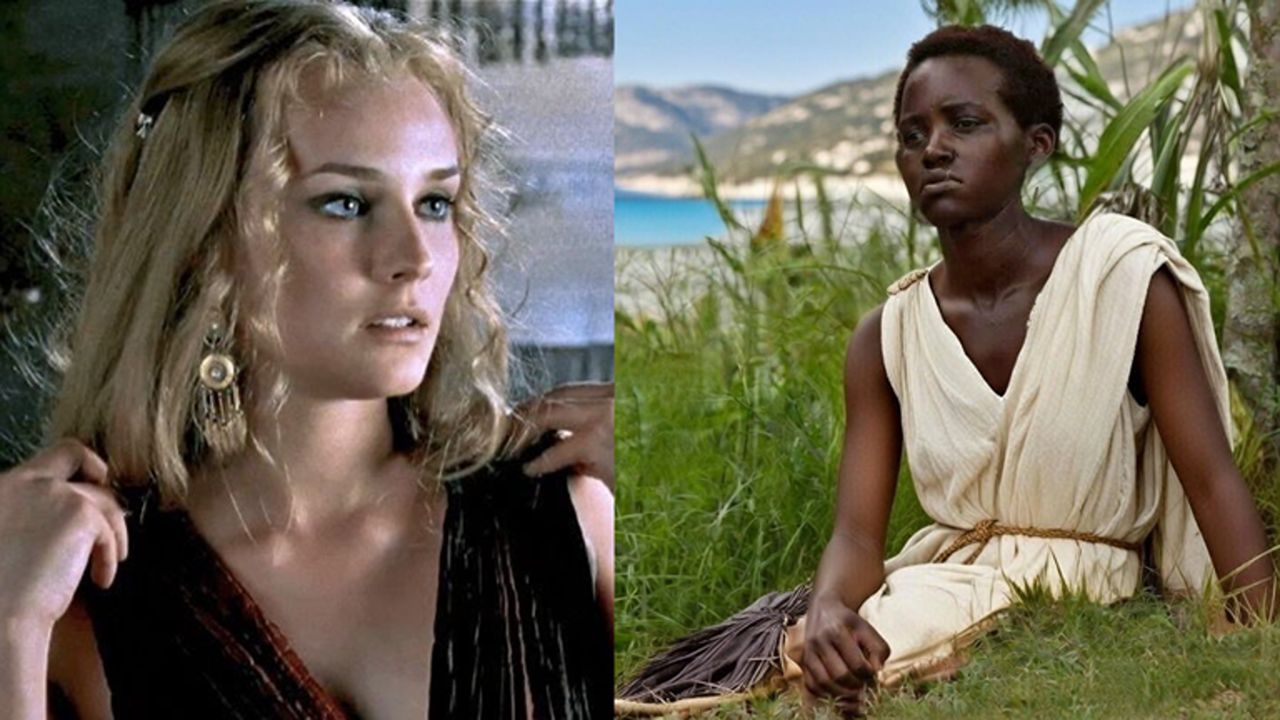
Helen of Troy remains one of antiquity’s most enduring and paradoxical figures—a woman whose legendary beauty launched a thousand ships and whose name has become synonymous with both desire and devastation. Yet beneath the epic poems and cinematic adaptations lies a surprisingly tangled marital history. The simple question of “who was the husband of Helen of Troy” does not yield a single, straightforward answer. Depending on where you are in the mythic timeline, Helen was the wife of three different men: Menelaus, the Spartan king she was bound to by oath and duty; Paris, the Trojan prince whose love sparked a decade-long war; and Deiphobus, another Trojan prince she was forced to marry after Paris fell in battle.
To understand Helen’s husbands, one must first understand the political machinery of ancient Greece. Helen’s hand in marriage was the most coveted prize in the Hellenic world, attracting a host of powerful suitors. Her foster father, King Tyndareus of Sparta, feared that choosing one would provoke a bloody conflict among the rest. It was the cunning Odysseus who proposed the solution: all suitors would swear a binding oath to defend the chosen husband against anyone who threatened his marriage to Helen.
With this “Oath of Tyndareus” in place, Tyndareus selected Menelaus, the brother of the powerful King Agamemnon of Mycenae, as his son-in-law. Menelaus became king of Sparta through this union, and Helen bore him a daughter, Hermione. This was her first and, in many ways, her most legitimate husband—a union sanctioned by law, oath, and the political stability of Greece.
You Might Like: Christopher Nolan’s Family Portrait: The Wife, Four Kids, and a $6 Billion Legacy
Menelaus: The Wronged Husband
Diane Kruger as Helen of Troy in Troy (2004). pic.twitter.com/pk3ZQ1jfTA
— cinesthetic. (@TheCinesthetic) July 15, 2026
The story of Menelaus is one of profound betrayal. Years into their marriage, while Menelaus was away from Sparta, the Trojan prince Paris arrived on what was ostensibly a diplomatic mission. What happened next is debated: in some versions, Paris abducted Helen by force; in others, including Homer’s Iliad, Helen willingly eloped with him, having fallen in love with the handsome prince.
Regardless, Helen’s departure for Troy was a direct violation of the sacred oath that bound all her former suitors. Menelaus, his honour shattered, turned to his brother Agamemnon. Together, they invoked the Oath of Tyndareus, rallying the Greek kings to assemble a massive fleet and sail for Troy to reclaim Helen. Menelaus was not just a deceived husband; he was the casus belli—the very cause of the Trojan War. His determination to retrieve his wife fuelled a ten-year siege that would become the most famous conflict in Western mythology.
After the fall of Troy, Menelaus finally confronted Helen. According to legend, he was so overcome with rage that he intended to kill her on the spot for her infidelity. But as he raised his sword, he was said to have been overcome not by justice, but by her irresistible beauty. He dropped his weapon, and the pair were reconciled. They resumed their married life in Sparta, ruling together once more. In Homer’s Odyssey, we find Menelaus and Helen living in Sparta years after the war, their relationship complex but functional—a testament to the strange durability of their bond.
Paris and Deiphobus: The Interlopers
In Greek mythology, Helen of Troy, the daughter of Zeus and Leda, was said to be the most beautiful woman in the world, a beauty later immortalized as “the face that launched a thousand ships.”
Diane Kruger as Helen in Troy (2004). pic.twitter.com/ddgKVD5cYC
— James Lucas (@JamesLucasIT) July 16, 2026
Helen’s second husband was Paris (also known as Alexandros), the Trojan prince whose fateful judgment in the “Judgement of Paris” had already sealed his destiny. It was Paris who, awarded Helen by Aphrodite as a prize for naming her the fairest goddess, sailed to Sparta and either seduced or stole her away. In Troy, Paris and Helen lived as husband and wife, their union the flashpoint for the Greek invasion. However, Paris was not a great warrior. He was eventually mortally wounded by an arrow from the Greek hero Philoctetes. As he lay dying, he was taken to his former wife, Oenone, who refused to heal him out of spite—leaving Paris to perish and leaving Helen a widow.
Also See: Mary Jo Campbell’s Family Tree: Husbands, Children, Grandchildren, and Beyond
With Paris dead, Helen’s hand in marriage became a political tool within the besieged city. According to later traditions, Helen was then married to Deiphobus, another of Priam’s sons and a more formidable warrior than his brother. This marriage, however, was a marriage of convenience and survival, not love. Helen’s loyalty to her Trojan “husbands” was always suspect.
In perhaps the most cynical act of her mythic career, Helen betrayed Deiphobus to the victorious Greeks. When the Trojan Horse was opened and the city fell, she is said to have led Menelaus to Deiphobus’s home, allowing her original husband to kill the Trojan prince. With this final act of treachery, Helen returned to the arms of Menelaus, the only husband who truly mattered in the grand narrative of Greek myth.
In 2 Weeks, experience The Odyssey in theaters on July 17. Get tickets now. https://t.co/sk8jwTBi7P pic.twitter.com/9wjoSuVJqE
— The Odyssey Movie (@odysseymovie) July 1, 2026
In a fascinating modern echo of this ancient drama, Christopher Nolan’s 2026 film adaptation of Homer’s The Odyssey has cast Lupita Nyong’o in the dual roles of Helen of Troy and her sister Clytemnestra. The casting is a clever nod to the intertwined fates of these two women, both of whom were wives to powerful kings and catalysts for epic bloodshed. Nolan’s film, starring Matt Damon as Odysseus, places Helen’s story within the larger context of the Greek hero’s journey home —a reminder that even a thousand years later, the question of Helen’s husbands continues to captivate the cinematic imagination.